Students who apply to Ivy Leagues and then choose to go elsewhere end up faring just as well in life.
Any parents who bribed and cheated to get their kids into elite universities would be buying into a pervasive misconception. It’s easy to assume that because students from elite schools make more money (they do), that going to those schools is what causes them to make more money. This is wrong.
How do we know? When researchers have investigated the value of going to a top high school or college, they’ve found the long-term financial benefits are, as one paper says, “comparable to zero.” That is, students with the same abilities and ambitions will do equally well whether they go to an elite college or not. It’s the kids who make the school – not the school that makes the kids.
In one telling study, a team of Princeton University economists followed students of comparable test scores and grades who applied to the most elite high school in the Boston area – Boston Latin. Some were admitted and others were rejected. The researchers also looked at comparable students accepted and rejected by second-tier selective high schools in the Boston area.
Boston Latin boasts much higher average SAT scores than second-tier schools, and those in turn boasted of higher SATs scores than the nonselective schools. The implication is the quality of education at these elite education boosts SAT scores.
But when the economists compared students with similar grades and test scores at the time they applied to high school, they found their later SAT scores were indistinguishable, whether they went to Boston Latin or not. The economists did the same comparison between similar students applying to second-tier schools and those attending unselective high schools, and again found SAT scores were indistinguishable.
The findings suggest there was absolutely no SAT advantage to going to the better schools. The higher average SATs in Boston Latin were probably caused by the selection process; the schools only admitted kids who did well on other tests, and those other test scores correlate to SAT scores.
This is all laid out in the book “The Formula: The Universal Laws of Success,” which I’ve been rereading. As the author, Albert-Laszlo Barabasi, wrote: “We’ve established that, as a group, the Boston Latin kids do perform better when compared to their counterparts. … What the data tells us, though, is that the difference … is not because the school enhances their performance. It’s because high achievers continue to excel no matter what education a school offers.”
Another pair of economists, one also at Princeton University and the other at the research firm Mathematica, demonstrated that going to an Ivy League school doesn’t help people make more money. They found it’s more likely that Ivy League schools select for the kinds of students likely to make more money as adults.
In an initial study in 2002 and a follow-up study published in 2011, they compared students at Ivy League schools to those who were accepted but chose, perhaps for financial or personal reasons, to attend less selective colleges. In the second study, they also included students who had applied to Ivy League schools but were not accepted.
On average, Ivy League graduates come out earning twice as much as graduates of less selective schools, but when the researchers compared only students who were accepted into the Ivy League, there was no difference between those who went and those who did not, provided those rejected graduated from some other college.
The 2011 study, which was popularized in this New York Times column, showed that future financial success for comparable students didn’t even hinge on where they were accepted, but did correlate with where they applied. The researchers speculate that applying to Harvard shows ambition, and ambition is correlated to financial success.
If the Ivy League bribery scandal played out as prosecutors suggest, with parents paying off officials, then some of the applicants deserve sympathy – for they are, like everyone else, limited by their own talents and ambitions. And those honest families trying to follow the rules can take heart that even if the cheaters hadn’t been caught, they wouldn’t have bribed their way into anything of lasting value.
Most of the time, a twitchy eyelid or an irksome knee, is just that—no biggie. But there are instances when a seemingly insignificant health quirk may be your body’s way of saying, Hey there, let’s go to the doc.
“Most people know the major symptoms of something like a stroke Opens a New Window. or heart attack, but sometimes you get weird presentations of serious problems,” says Jake Deutsch, M.D., founder and clinical Director of CURE Urgent Care in New York and an Attending Physician in the ER at Hackensack University Medical Center. Here are eight to watch for. Check-Ups Every Guy Needs >>> Opens a New Window.
Are you always reaching for a hoodie? Frequently getting the chills when no one else is? Have your thyroid function tested; it could be a sign of an underactive thyroid, Gaynor says. Other symptoms to look out for: a puffy face, fatigue, hair loss (on your body, too) and weight gain Opens a New Window. . 6 Best Fixes for Hair Loss >>> Opens a New Window.
3. Brain Fog
If you’re feeling a little out of it despite getting a good night’s sleep (and a strong cup of coffee Opens a New Window. ), think about what you’ve been eating. Loading up on bread and pasta? Also have white spots on your tongue? Go see a gastroenterologist as you could have celiac disease, Gaynor says.
“There’s a huge gut-brain connection, and if gluten is causing inflammation in your gut, you’re malabsorbing nutrients and you’ve disturbed your gut’s microbiome,” he adds. “You may not have any stomach upset except that you feel bloated sometimes.” 7 Easy Ways to Beat Bloat >>> Opens a New Window.
4. A Weird Taste in Your Mouth
It may be metallic—or just a different, unpleasant taste. Regardless, if it’s persistent and you haven’t recently had a cold (which can affect taste buds), get checked out and bring all the vitamins and over-the-counter meds you regularly take to the doctor with you.
“Overdosing on vitamins Opens a New Window. can cause it,” Deutsch says.
Multis, as well as iron and calcium supplements, and even zinc lozenges can cause it. The taste usually goes away when the vitamins flush out of your system, but if you’re taking daily vitamins, you keep replenishing the (too-high) levels. Not popping pills? It’s even more important to see your doc: “The taste could mean a more complicated problem with your sinuses or a tumor compressing nerves that help with your sense of smell and taste,” Deutsch says. Taking Too Many Supplements May Increase Your Cancer Risk >>> Opens a New Window.
5. Bleeding Gums
Seeing red when you floss or brush is a signal of gingivitis or periodontal disease. That’s not so weird, but what is: If you ignore it, you increase your risk for various chronic diseases.
“Inflammation in the gums releases inflammatory mediators into the blood that can damage the lining of blood vessels, which allows plaque to build up,” Gaynor says.
Aside from heart problems, the inflammation can also increase your risk for type-2 diabetes Opens a New Window. . Low-Fat Yogurt Protects Against Diabetes >>> Opens a New Window.
6. You Crave and Chew Ice
Have you recently become a vegan Opens a New Window. ? Crunching away on cubes can signal an iron deficiency. Experts aren’t exactly sure what’s behind the link, but a study in the journal Medical Hypothesis Opens a New Window. suggests that what people are really after is the stimulating effects from the crunch, crackle, and cold. If you’re deficient in iron, there may be less oxygen in the blood (iron is needed to transport O2) so you’re usually fatigued, Deutsch says.
“People may crave the reaction they get from chewing ice—it wakes them up.” Should You Go Vegan Before 6? >>> Opens a New Window.
7. Come-and-go Jaw Pain
Intermittent shooting pains in the side of your jaw Opens a New Window. , at the hinge, is often diagnosed as TMJ, or temporal mandibular joint disorder, caused by damaged cartilage or misalignment. But it can be misdiagnosed, and instead indicate Lyme disease.
“Lyme disease affects certain nerves that causes the pain in the jaw,” Gaynor says. “In the old days before we knew about the connection, we treated it as TMJ.”
About 30,000 cases of Lyme are reported to the CDC each year, but new data estimates the number may actually be closer to 10 times Opens a New Window. that.
“Lyme disease has a number of weird presenting symptoms—it could be anything from irregular heart rhythms and fatigue to manic depression,” Gaynor says. What Healthy Guys Need to Know About Their Heart >>> Opens a New Window.
8. Never-ending Hiccups
Aside from driving you insane, hiccups that last for a day or two or longer could be triggered by lung or esophageal cancer, says Gaynor.
“The central nervous system controls hiccups and these types of cancers emit antibodies that affect the part that trigger hiccups,” he says.
Persistent hiccups might also indicate a stroke, Deutsch says. 10 Ways to Cancer-Proof Your Life >>>
Millions of older Americans count on Social Security to pay the bills later in life. But if you're not careful, you could end up with far less money from Social Security than you might have initially anticipated. Here are three reasons why your benefits might come in lower than expected -- and what to do about them.
1. You're planning to file before your full retirement age
Your Social Security benefits are based on your earnings history -- specifically, your top 35 working years. But the age at which you file for benefits could cause them to go down. For each year you file ahead of full retirement age, or FRA, your benefits will be reduced by a certain percentage, up to a maximum of 30% (assuming your FRA is 67 and you file at the earliest possible age of 62).
IMAGE SOURCE: GETTY IMAGES.
Here's what full retirement age looks like depending on the year you were born:
Year of Birth
Full Retirement Age
1943–1954
66
1955
66 and 2 months
1956
66 and 4 months
1957
66 and 6 months
1958
66 and 8 months
1959
66 and 10 months
1960
67
DATA SOURCE: SOCIAL SECURITY ADMINISTRATION.
Let's say your earnings record entitles you to $1,500 a month at an FRA of 67. If you file at 62 instead, you'll knock your monthly benefits down to $1,050. Worse yet, that reduction will remain in effect for the rest of your life (unless you withdraw your application for benefits and repay the full amount you collect within a year of claiming).
Now if you happen to find yourself in a situation in which you need money immediately -- say, you've lost your job or encounter a series of costly medical issues -- then you may have no choice but to file for Social Security before reaching FRA. Otherwise, know when you're entitled to collect your benefits in full, and aim to hold off until FRA before pulling the trigger.
2. Your earnings history is inaccurate
As stated above, your Social Security benefits are based on your income during your top 35 years of earnings. But if the Social Security Administration (SSA) has erroneous information on file, you could end up losing out.
Imagine you earned $85,000 your last year on the job, only for some reason, the SSA only has $48,000 on file. It's odd, but it could happen. Similarly, the SSA might have gaps in your work history so that it only has you down as working for 32 years instead of 35. If that's the case, you'll get $0 factored into your personal benefits calculation for three years, thereby bringing down the total amount you're entitled to collect.
To avoid losing money to what could be nothing more than an administrative glitch, be vigilant about checking your earnings record and report any mistakes you find to the SSA as soon as you spot them. Keep in mind that the SSA won't send copies of your earnings statements unless you're 60 or older, so if you're younger than 60, you'll need to create an account on the SSA's website and review them there.
3. You're aiming to work and take benefits simultaneously
Though you're allowed to work and collect Social Security at the same time, you should be aware that if you do, you risk having a portion of your benefits withheld depending on how much you earn. For the current year, your first $17,040 in income is exempt from what's known as the Social Security earnings test. Beyond that, however, you'll lose $1 in benefits for every $2 of earnings you bring in so that if you earn $18,040 a year, you'll have $500 in benefits withheld.
That said, if you'll reach FRA later this year, your first $45,360 of income is exempt from the earnings test. After that, you'll lose $1 in benefits for every $3 you earn.
Keep in mind, however, that the above rules only come into play if you haven't yet reached FRA. Once FRA kicks in, you can earn as much as you'd like and it won't impact your benefits whatsoever -- which is yet another good reason to hold off on filing until that point. Another thing you should know is that whatever money is withheld from your Social Security payments initially will be added back once FRA hits. In other words, you're not losing that money forever -- you're just not getting it right away.
If you're counting on Social Security to provide a sizable portion of your income, then be sure to read up on the program's various rules. The more you know about Social Security, the greater your chances of getting the most money possible from it.
The $16,146 Social Security bonus most retirees completely overlook If you're like most Americans, you're a few years (or more) behind on your retirement savings. But a handful of little-known "Social Security secrets" could help ensure a boost in your retirement income. For example: one easy trick could pay you as much as $16,146 more... each year! Once you learn how to maximize your Social Security benefits, we think you could retire confidently with the peace of mind we're all after. Simply click here to discover how to learn more about these strategies.
In Britain, calls for a 4-day week: Can it be done?
LONDON — Increasing numbers of workplaces around the world are embracing technology, and a greater array of tasks is being automated. In the eyes of one major British labor organization, that need not be a threat to workers, but may instead offer an opportunity: less time working.
“I believe that in this century, we can win a four-day working week, with decent pay for everyone,” Frances O’Grady, the head of the Trades Union Congress, an umbrella group, said in a speech at the labor federation’s annual conference. That, she said, would help workers reap the benefits of technological change.
The economist John Maynard Keynes had predicted that people would eventually work for just 15 hours a week. Instead, technology has led to unpredictable, more intensive and longer hours at work, the Trades Union Congress said. “This is a return to the days of piecework, creating a culture where workers are required to be constantly available to work,” the group said in a report. Sign up for the Morning Briefing newsletter
It is not the only organization scrutinizing how technology affects productivity and work-life balance. Who is experimenting with a shorter workweek?
• A trial of a six-hour workday in Goteborg, Sweden, led to happier, healthier and more productive employees. The problem: It was too expensive.
•Perpetual Guardian, a firm that manages trusts and estates in New Zealand, instituted a four-day week and kept wages the same. It said productivity increased among its staff when working hours were reduced to 32 hours from 40. The company is now considering whether to make the change permanent.
• In an effort to close a hefty gap in its state budget in the years after the 2008 financial crisis, Utah trimmed the workweek. Proponents said the move had the effect of improving the offering of government services available online and was better for the environment, but the state also benefited from volunteer groups picking up the slack when government organizations were closed.
•Amazon, the online retail behemoth, has tested a small pilot program for a 30-hour workweek, where staff worked reduced hours, though for reduced pay.
What else is being done to guard against encroaching technology?
•France has created a law giving workers the “right to disconnect.” It requires companies with more than 50 employees to negotiate a new protocol to ensure that work does not spill into after-work hours, an effort to prevent cases of burnout, which officials say are becoming more prevalent.
• Several measures have been taken in Germany to improve work-life balance. The country’s Labor Ministry ordered its supervisors in 2013 not to contact employees outside office hours. In 2011, the German automaker Volkswagen began shutting off its BlackBerry servers at the end of the workday. Daimler, another German car company, deletes emails sent to employees while they are on vacation. So will we all have 3-day weekends soon?
Unfortunately not. It may be feasible for some companies, but it is unlikely to happen across entire economies in the years to come.
Any such change, even if it were possible, would not occur overnight, said Alex Bryson, a professor who specializes in labor studies at University College London. Companies that wanted to limit working hours would have to make investments to help their workers become more productive, which would take time and cost money, he said.
“It’ll be a gradual switch,” added Paul Swinney, the head of policy and research at the Center for Cities, a London-based think tank. “We’ll see a bit of that with some people deciding to work four days one week and five another. It’ll change gradually along with social norms.”
“In 50 or 100 years’ time, it may be that four days is the norm,” he continued, “but we shouldn’t expect it by 2020.”
Republicans have become ‘silent’ on deficit reduction, Romney says
Mitt Romney, the former Republican presidential nominee and current Senate hopeful in Utah, on Monday called out members of his party for putting their long-espoused goal of deficit reduction on the back burner once President Trump won the White House, in a rare mention of the issue by a candidate in this year’s midterm elections.
In a message posted on his Senate campaign website, Romney said that Republicans “have been shouting about this as long as I can remember.”
“We called for an amendment to balance the budget,” he said. “Just a few years ago, the Tea Party movement brought new energy to the issue. But now that Republicans are in charge in Washington, we appear to have become silent about deficits and debt.” Subscribe to the Post Most newsletter: Today’s most popular stories on The Washington Post
Romney’s 2012 running mate, now-House Speaker Paul D. Ryan (R-Wis.), built a reputation as a deficit hawk and a vocal advocate for entitlement reform over his years in Washington. But with Trump’s ascension to the White House, Ryan and other Republicans on Capitol Hill have largely punted on deficit reduction , working instead to pass a $1.4 trillion tax cut as well as a sweeping $1.3 trillion spending bill.
Romney made no mention of either measure in the statement on his campaign website. But he pointed to the country’s $21 trillion national debt as well as a recent forecast by the Congressional Budget Office that deficits will soon balloon to more than $1 trillion per year.
“I’m not saying we should immediately cut one trillion dollars from government spending,” Romney said. “But I am saying, with a booming economy, full employment, a soaring stock market, and record asset values, we should be shrinking the deficit, not growing it.”
In the post, Romney, the former chairman of Bain Capital, sought to strike an everyman tone. He related the story of how he bought his “first house” and was shocked to realize that of his $246 monthly mortgage payment, $241 went toward interest.
That led to a change in how he approached spending, Romney said.
“Henceforth, credit card balances would be paid on-time and in-full,” he said. “If we wanted something we could not immediately afford, we would save before we bought it; I figured we could get about twice as much stuff by saving rather than by buying on credit.”
In his past campaigns, Romney has at times stumbled when making comments about wealth. In 2012, he mentioned that his wife, Ann Romney, drives “a couple of Cadillacs” while he drives “a Mustang and a Chevy pickup truck,” a comment that prompted his campaign to offer up details and drew attention to the fact that his family owns several cars in different states.
He has also previously described his net worth as “between 150 and 200 some-odd million,” an estimate that raised some hackles due to its breadth.
felicia.sonmez@washpost.com
Whichever company’s vision wins out will shape the future of the economy.
While lots of attention is directed toward identifying the next great start-up, the defining tech-industry story of the last decade has been the rise of Apple and Google. In terms of wealth creation, there is no comparison. Eight years ago, neither one of them was even in the top 10 most valuable companies in the world, and their combined market value was less than $300 billion. Now, Apple and Alphabet (Google’s parent company) have become the two most valuable companies, with a combined market capitalization of over $1.3 trillion. And increasingly, these two behemoths are starting to collide in various markets, from smartphones to home-audio devices to, according to speculation, automobiles.
But the greatest collision between Apple and Google is little noticed. The companies have taken completely different approaches to their shareholders and to the future, one willing to accede to the demands of investors and the other keeping power in the hands of founders and executives. These rival approaches are about something much bigger than just two of the most important companies in the world; they embody two alternative models of capitalism, and the one that wins out will shape the future of the economy.
In the spring of 2012, Toni Sacconaghi, a respected equity-research analyst, released a report that contemplated a radical move for Apple. He, along with other analysts, had repeatedly been pushing Apple’s CEO, Tim Cook, to consider returning some of Apple’s stockpile of cash, which approached $100 billion by the end of 2011, to shareholders. Cook, and Steve Jobs before him, had resisted similar calls so that the company could, in the words of Jobs, “keep their powder dry” and take advantage of “more strategic opportunities in the future.”
But there was another reason Apple wouldn’t so readily part with this cash: The majority of it was in Ireland because of the company’s fortuitous creation of Apple Operations International in Ireland in 1980. Since then, the vast majority of Apple’s non-U.S. profits had found their way to the country, and tapping into that cash would mean incurring significant U.S. taxes due upon repatriation to American soil. So Sacconaghi floated a bold idea: Apple should borrow the $100 billion in the U.S., and then pay it out to shareholders in the form of dividends and share buybacks. The unusual nature of the proposal attracted attention among financiers and served Sacconaghi’s presumed purpose, ratcheting up the pressure on Cook. A week later, Apple relented and announced plans to begin releasing cash via dividends.
The results of Sacconaghi’s report were not lost on Silicon Valley, and Google responded three weeks later. At the time, the share structure that the company put in place when it went public in 2004 was becoming fragile. This original arrangement allowed Google’s founders to maintain voting control over the company, even as their share of ownership shrunk as more shares were issued. The explicit premise was that this structure would “protect Google from outside pressures and the temptation to sacrifice future opportunities to meet short-term demands.”
It has been a good year for the Big Bulls in the market, despite the bitter experience for small caps.
China, Brexit, Trump trigger wild ride for global equities
Rich get richer as fortunes whipsaw through $4.8 trillion
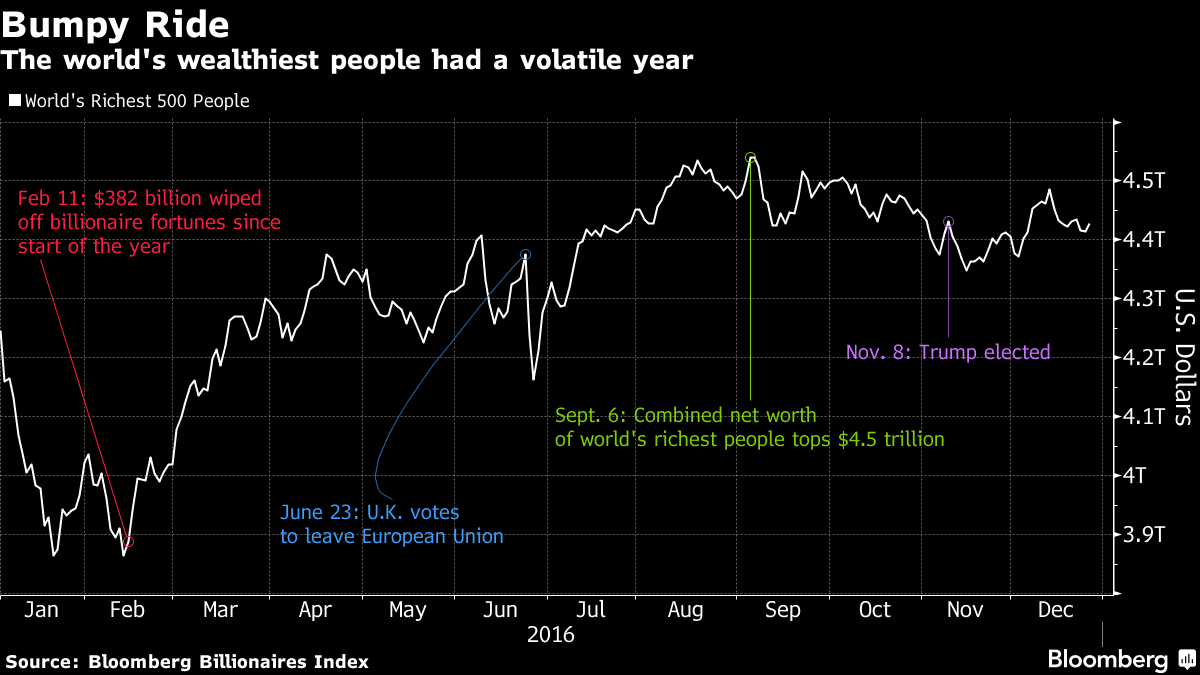
In a year when populist votersreshapedpower and politics across Europe and the U.S., the world’s wealthiest people are ending 2016 with $237 billion more than they had at the start.
Triggered by disappointing economic data from China at the beginning, the U.K.’s vote to leave the European Union in the middle and the election of billionaire Donald Trump at the end, the biggest fortunes on the planet whipsawed through $4.8 trillion of daily net worth gains and losses during the year, rising 5.7 percent to $4.4 trillion by the close of trading Dec. 27, according to the Bloomberg Billionaires Index.
“In general, clients rode through the volatility,” said Simon Smiles, chief investment officer for ultra-high-net-worth clients at UBS Wealth Management. “2016 ended up being a spectacular year for risk assets. Pretty remarkable given the start of the year.”
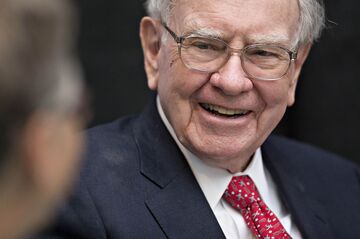
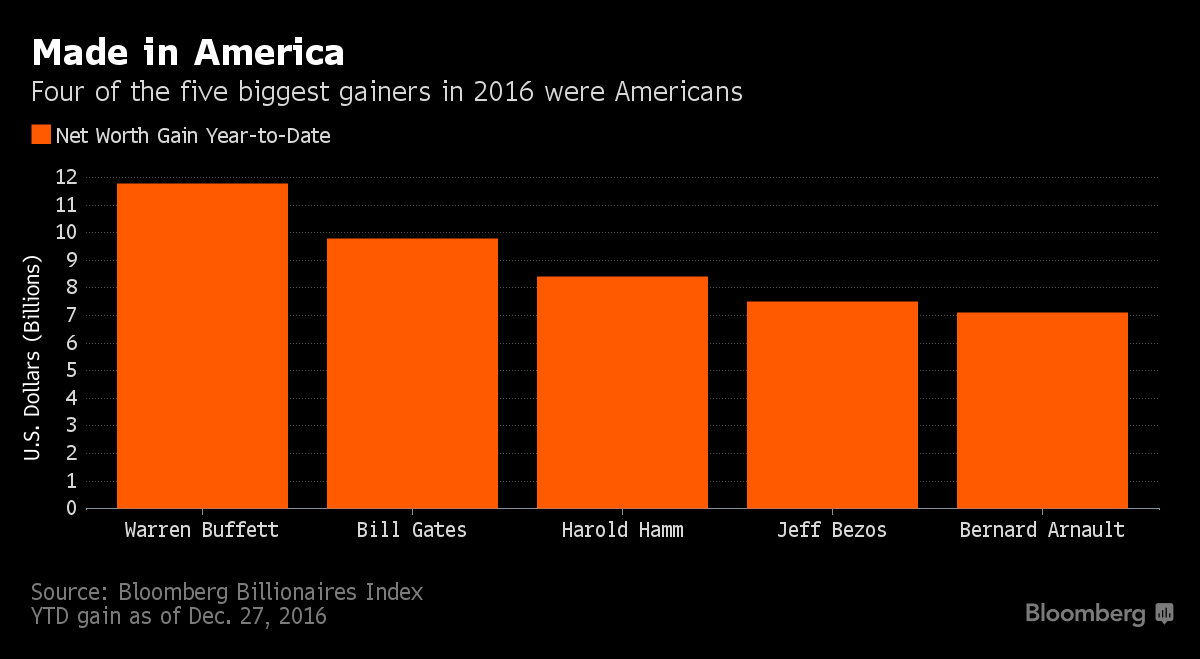
The gains were led by Warren Buffett, who added $11.8 billion during the year as his investment firm Berkshire Hathaway Inc. saw its airline and banking holdings soar after Trump’s surprise victory on Nov. 8. Buffett, who’s pledged to give away most of his fortune to charity, donated Berkshire Hathaway stock valued at $2.6 billion in July.
Berkshire Bonanza
Warren Buffett
Photographer: Daniel Acker/Bloomberg
The U.S. investor reclaimed his spot as the world’s second-richest person two days after Trump’s victory ignited a year-end rally that pushed Buffett’s wealth up 19 percent for the year to $74.1 billion.
“2016’s been event-driven with global news driving prices rather than fundamentals,” said Michael Cole, president of Ascent Private Capital Management, which has about $10 billion of assets under administration. “The belief that Trump is going to come in and deregulate big parts of the economy is driving the markets right now.”
The individual gains for the year were dominated by Americans, who had four of the five biggest increases on the index, including Microsoft Corp. co-founder Bill Gates, the world’s richest person with $91.5 billion, and oilman Harold Hamm.
The country’s richest were largely opposed to a Trump presidency during the election, including Dallas Mavericks owner Mark Cuban, who told the media in May that stocks could fall as much as 20 percent if Trump were to win the election.
Wealth Administration
U.S. billionaires -- including Buffett -- favored Trump’s rival Hillary Clinton. Still, they profited from his victory when they added $77 billion to their fortunes in the post-election rally fueled by expectations that regulations would ease and American industry would benefit.
The New York real estate mogul is building a cabinet heavy on wealth and corporate connections, and light on government experience, a mix that hedge fund billionaire Ray Dalio said last week would unleash the "animal spirits" of capitalism and drive markets even higher. Dalio is the world’s 63rd-richest person with $14.1 billion.
Wilbur Ross
Photographer: Drew Angerer/Getty Images
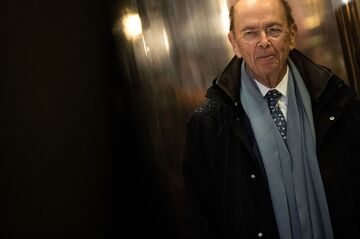
Investors and executives welcomed Trump’s picks, including billionaire Wilbur Ross to lead the Department of Commerce and former Goldman Sachs Group Inc. executive Steven Mnuchin as his Treasury secretary, who have a combined net worth of at least $5.6 billion, according to the index.
“You know, I was not opposing Trump as much as most people,” Saudi Arabian billionaire Mohamed Bin Issa Al Jaber said in a Dec. 11 interview. “He’s capable and -- as a businessman -- he’s shrewd about the bottom line. The people he’s surrounding himself with have baggage but they’re also successful and shrewd.”
France’s Bernard Arnault was the sole non-American representative among the five best performers, adding $7.1 billion to take his fortune to $38.9 billion. His LVMH Moet Hennessy Louis Vuitton SE said the Chinese luxury-goods market is improving.
Gates remained the world’s richest person throughout the year. Amancio Ortega, Europe’s richest person and founder of the Zara clothing chain, was in second place on the index for most of the year until he ceded it to Buffett in November. Ortega, who dropped $1.7 billion in 2016, is the world’s third-richest person with $71.2 billion.
Harold Hamm
Photographer: Andrew Harrer/Bloomberg
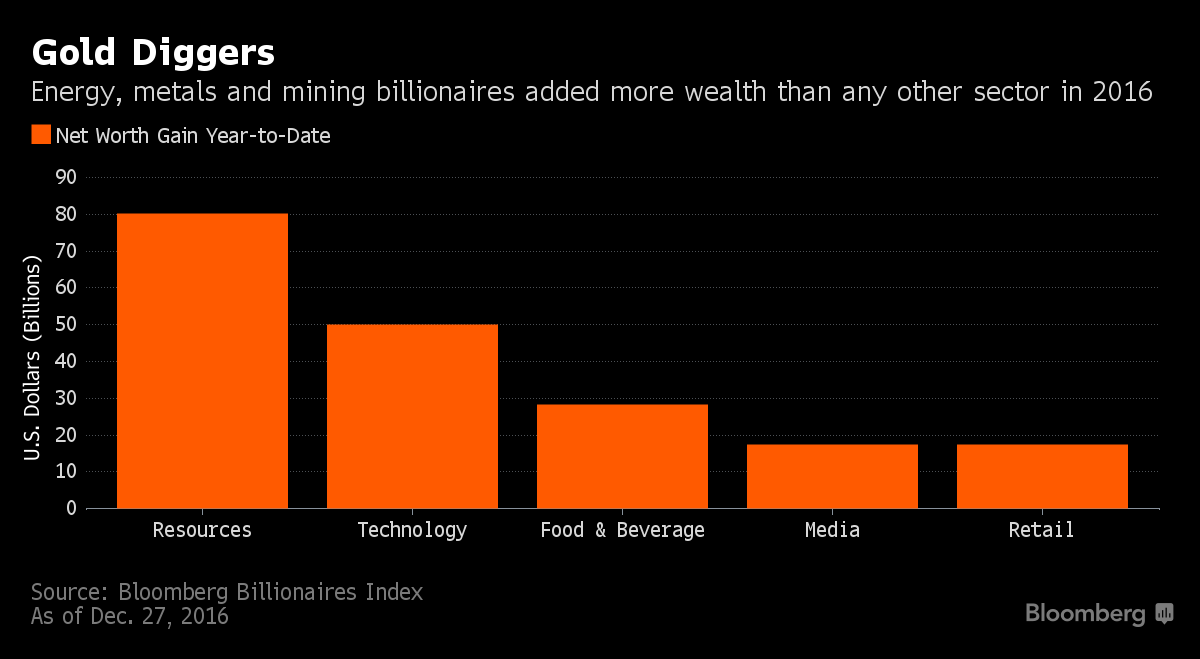
Wildcatter Hamm’s fortune was propelled by a strengthening oil price and expectations a Trump administration will slash fossil-fuel regulations. Hamm added $8.4 billion to more than double his fortune to $15.3 billion. He led the 49 energy, metals and mining billionaires, who were the best-performing category on the ranking, adding $80 billion and reversing the $32 billion fall they had in 2015.
Billionaire brothers Charles and David Koch each dropped $2 billion after Koch Industries reported on its website that annual revenue is estimated to be "as high as $100 billion," compared with the estimate of "as much as $115 billion" that the conglomerate published on the site previously. Company spokesman Rob Carlton stated in a Nov. 17 e-mail that Koch revenue fluctuates with the price of commodities.
Technology fortunes were the second-best performing on the ranking, with 55 billionaires adding $50 billion to their fortunes over the year, despite worries that a Trump presidency might introduce policies that could hurt their companies.
“I think we’ll have to see what the policies of the administration are,” Google co-founder Sergey Brin told the media gathered on the red carpet of the annual Breakthrough Prize gala in Silicon Valley in December. “I certainly hope they will be pro-science, pro-technology and all the things this world has really benefited from.”
Jeff Bezos
Photographer: Patrick Fallon/Bloomberg
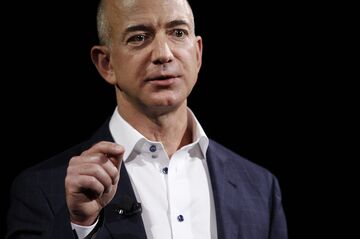
Amazon.com Inc. founder Jeff Bezos, who doubled his fortune to $60 billion in 2015, led gains among technology executives again this year, rising $7.5 billion in 2016 on robust sales growth at the online retailer. He was followed by Facebook Inc. co-founder Mark Zuckerberg, who added $5.4 billion.
Hidden Wealth
Some of the industry’s biggest relative gains went to the founders of the world’s leading startups, such as Uber Technologies Inc.’s Travis Kalanick and Snap Inc.’s Evan Spiegel. The so-called "unicorn" billionaires, which include Spotify Inc. co-founder Martin Lorentzon, who was identified as a billionaire for the first time in 2016, secured a series of mammoth funding rounds while moving closer to testing their fortunes on the public markets.
Other billionaires uncovered by the Bloomberg index in 2016 included the father and son behind Jose Cuervo tequila, New York real estate developer Axel Stawski and Kosovo construction tycoon Behgjet Pacolli.
Marcos Galperin
Photographer: David Paul Morris/Bloomberg
The index also unveiled 11 surviving family members of reclusive Thai entrepreneur Chaleo Yoovidhya, the inventor of Red Bull, whose heirs share a combined $22 billion net worth, the world’s largest energy-drink fortune. Three billionaires emerged in Argentina, including the country’s first technology billionaire Marcos Galperin, as markets rose on enthusiasm for President Mauricio Macri’s finance-friendly economic policies.
Wang Jianlin
Photographer: Justin Chin/Bloomberg
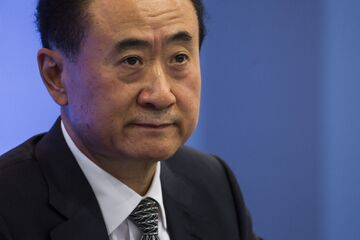
Most fortunes outside of the U.S. didn’t get the same boost from Trump’s victory, and were hurt by fluctuating commodities prices and the rise of the dollar, the currency used for the Bloomberg ranking. Nine of the 10 biggest decliners in 2016 were from outside the U.S., led by China’s second-richest person, Wang Jianlin, who lost $5.8 billion. Wang ended the year as the world’s 21st-richest person with $30.6 billion.
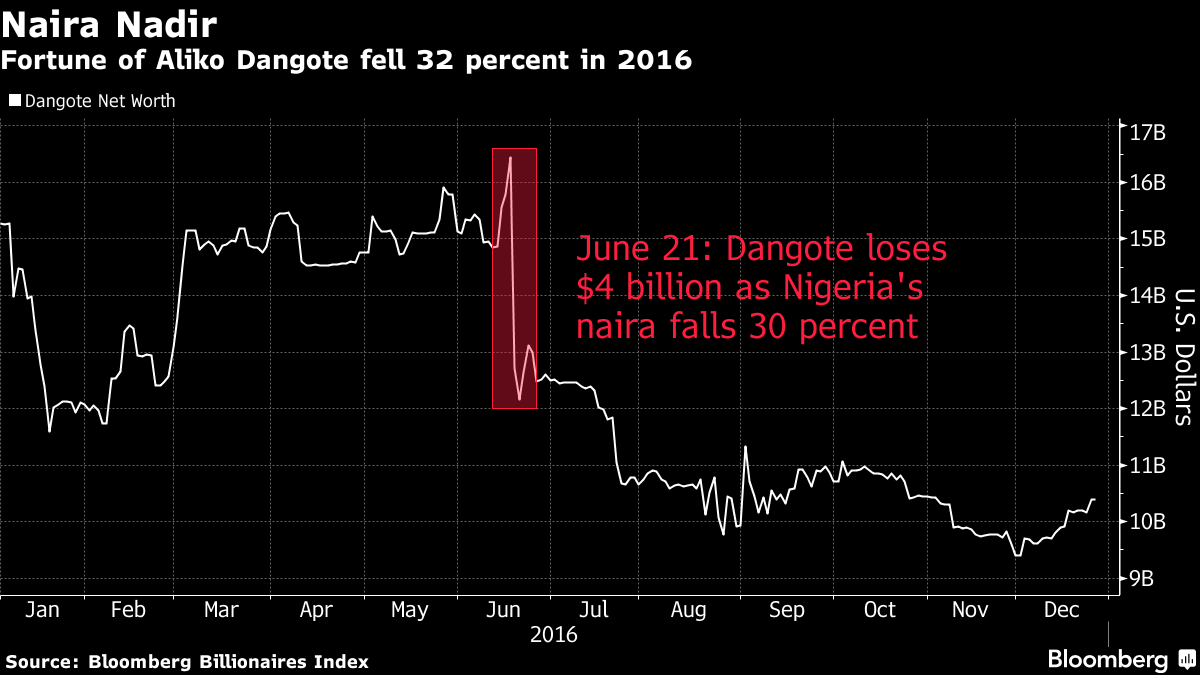
Nigeria’s Aliko Dangote, the richest person in Africa, lost $4.9 billion or one-third of his wealth as the combined effect of falling oil prices and the June devaluation of the naira pushed him to No. 112 with $10.4 billion. Dangote was the world’s 46th-richest person in June.
Saudi Arabia’s Prince Alwaleed Bin Talal Al Saud fell $4.9 billion, a 20 percent drop. Alwaleed said in November that all of his stakes in public companies including Citigroup Inc. are potentially for sale, reversing a longstanding policy that some of his most prized shareholdings were “forever.”
Chinese Downturn
Wealth creation in China turned negative for the first time since the inception of the Bloomberg index five years ago, with the country’s richest losing $11 billion in 2016 amid a slump in the Shanghai Shenzhen CSI 300 index and a 7 percent decline for the yuan against the dollar.
Alibaba Group Holding Ltd. founder Jack Ma closed the year with $33.3 billion, adding $3.6 billion in 2016. He dropped in and out of his place as Asia’s richest person for the first four months of the year before claiming it for good in May after Alibaba’s finance affiliate, which is laying the groundwork for an initial public offering expected as soon as next year, completed a record $4.5 billion equity fundraising round.
China has 31 billionaires on the index with $262 billion, trailing the U.S.. which has 179 billionaires who control $1.9 trillion, and Germany, whose 39 individuals have $281 billion. Russian billionaires also began to put the negative effects of U.S. and European sanctions behind them, reversing the combined $63 billion declines for 2014 and 2015 and adding $49 billion in 2016.
Looking Ahead
Wealth managers for the world’s richest are girding themselves for similarly frenetic start to 2017 as the seismic changes voters demanded this year start to take shape.
"Expect the unexpected," said Sabine Kaiser, founder of SKadvisory, which advises family offices on venture capital and private equity. "I don’t think family offices are overly concerned or getting too nervous but after Brexit and Trump they’ve resigned themselves to market volatility."