Tuesday, September 20, 2016

Half a Million Jobs Lost as Textile Crisis Hits Pakistan's Economy

  • More than 500,000 jobs lost in two years as factories close
  • Improving power, gas supply may halt export drop: central bank
A neglected waiting area, empty reception and dim lights greet visitors at what used to be the biggest textile factory in the northern industrial area of Pakistan’s economic hub.
At its peak Al-Abid Silk Mills Ltd. employed 7,600 employees in Karachi, now only a handful can be seen in the near-abandoned garment workshop. It’s one of hundreds that have shut down over the past few years, contributing to Pakistan’s exports falling to their lowest in six years.
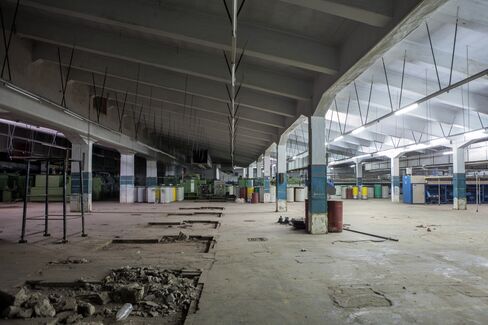
An abandoned textile factory.
 
Photographer: Asim Hafeez/Bloomberg
Exporters from South Asia’s second-largest economy, including textile manufacturers who account for more than half of all overseas shipments, say buyers have shifted to countries including Bangladesh and Vietnam as continual power outages impede their ability to meet order deadlines, while complaining that the government has provided scant support.
“The government has never planned how we need to go forward with the textile industry,” Naseem Sattar, the 80-year-old chief executive officer of Al-Abid, said as he smoked in his office in the derelict plant. “Such a factory is considered a national asset and we got no help.”
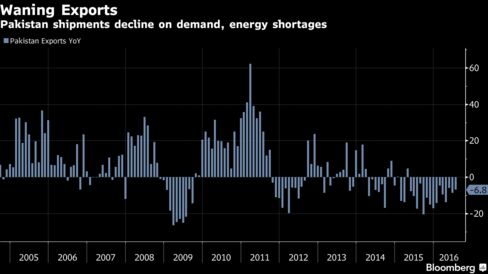
Despite a pick up in economic growth after the government submitted to an International Monetary Fund program in 2013 to avert a balance of payment crisis, Pakistan’s exports have fallen as global demand slows and the nation tries to overcome an energy shortage. Overseas shipments for the year through June fell to $21 billion, the lowest level since 2010, according to Pakistan Bureau of Statistics.
“Internally you have constraints on energy and then manufacturing keeping exports down,” said Turab Hussain, head of the economics department at the Lahore University of Management Sciences. “If oil prices go up and exports don’t pick up there will be pressure on your balance of payments and currency.”
About 100 member factories have shut down and at least 500,000 people have lost jobs in the past two years, according to Saleem Saleh, acting secretary general of All Pakistan Textile Mills Association, the biggest contributor to the nation’s textile exports. About two-thirds of the members of the Pakistan Bedwear Exporters Association have stopped working in the past five years, according to its head Shabir Ahmed.
Most factories shutting down are small or mid-sized plants unable to bear the extra cost of prolonged power outages. Meanwhile, larger factories have invested in their own power, including diesel generators, to cope with the nation’s electricity deficit of about 3,000 megawatts.
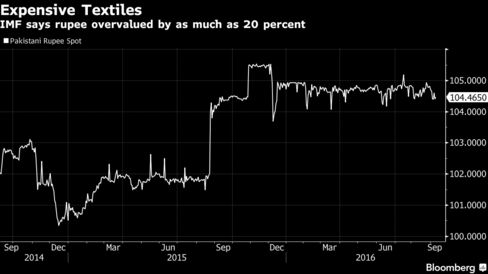
The IMF, which is set to conclude its three-year, $6.6 billion loan program with Pakistan at the end of this month, is pointing to a number of causes, including the local currency it says is overvalued by as much as 20 percent.
“The continued decline in exports is a cause for concern, to a good extent that’s due to a fall in international prices for cotton and other commodities,” Harald Finger, the IMF’s mission chief for Pakistan, said in a July interview. Domestically “there are security issues, there are continued power outages, even though they are declining now, that’s still a factor. There are issues around the business climate, and so on, and also one of these factors is also the real effective exchange rate.”
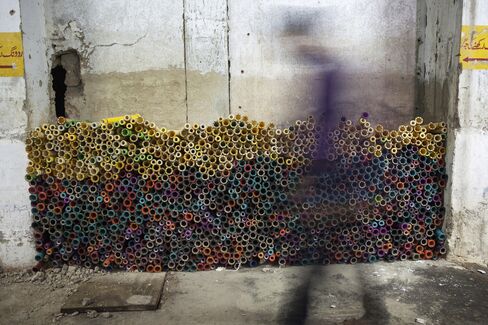
Yarn bobbins sit in a closed textile mill.
 
Photographer: Asim Hafeez/Bloomberg
About half of the Pakistan’s exports are shipped to six countries, while 40 percent of total textile exports are primary commodities, including cotton yarn sent to China, Minister of Commerce Khurram Dastgir Khan told lawmakers in Islamabad’s parliament on Sept. 5. Pakistan’s apparel exports grew less than half the pace of Bangladesh and Vietnam before the recent fall during 2005 to 2012, according to World Bank data.
For buyers, Pakistan’s competitors are also more alluring due to the country’s tarnished security image after years of insurgency, bombings and violence.

Security Perception

“If you can get the same price in Vietnam or India or Bangladesh, I think it’s still the case that most purchasers will still choose the other countries because their purchasing managers dare to go there,” said Mattias Martinsson, the Stockholm-based chief investment officer at Tundra Founder AB, which holds about $160 million in Pakistani stocks. “They can go freely around and don’t have to be afraid” which isn’t their perception of Pakistan, he said.
Even so, the country’s security situation has improved with an army push against insurgents after more than 100 students were killed by the Pakistani Taliban at a military school in 2014 in the northern city of Peshawar. About 449 people died in terrorist-related violence last year, the lowest in 10 years, according to the South Asia Terrorism Portal.
The government recognizes the industry’s malaise and Prime Minister Nawaz Sharif on a visit to Karachi on Sept. 8 said boosting exports is a top priority and his administration will soon announce relief measures.

‘Cannot Ignore’

Sharif is also pegging his 2018 re-election prospects on ending the daily power blackouts, relying on a surge of Chinese investment and projects worth $46 billion that were announced last year.
“Economic growth and exports are interlinked,” Sharif said. “We cannot afford to ignore our exports.”
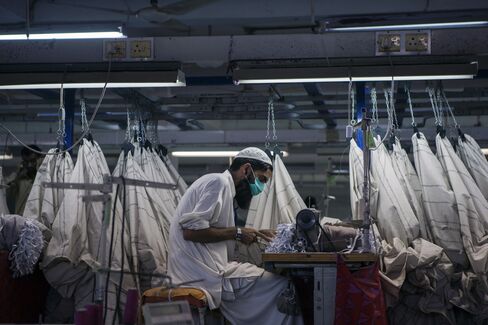
A worker operates a sewing machine at a textile manufacturer in Karachi.
 
Photographer: Asim Hafeez/Bloomberg
Pakistan already announced in June azero-rated sales tax regime for five export industries, including textiles. Borrowing has become more attractive with the discount rate at its lowest in more than four decades. Sharif this month asked the ministry of commerce to arrange a duty-free import of five million bales of cotton to plug a domestic shortage this year.
Despite these measures, State Bank of Pakistan Governor Ashraf Mahmood Wathra says the nation needs to diversify products and exports markets away from those on a declining trend. However, he expects improved electricity and gas supplies this year to stem some of the drop in exports.

‘Very Happy’

“When I speak to industrialists, I see them more comfortable than two-to-three years ago,” Wathra said. Textile exporters complain about tax refunds being delayed by the authorities, but otherwise “they are very happy with the interest rate and refinance rate,” he said.
Sattar, whose factory used to make $100 million annual revenue at its peak, doesn’t agree. He wants to get his plant running again, but is unable to repay loans taken to purchase the milling machines. Sattar is now being hounded by banks and the country’s anti-graft agency, he said.
“If you are drowning, they push you further down,” he said. “Textiles are going away from Pakistan.”

Monday, August 22, 2016

Koreans Are Reluctant to Get Married, Let Alone Have Babies

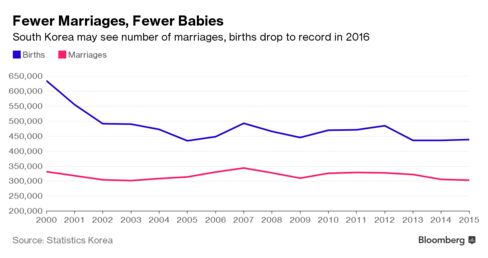
South Koreans are likely to have fewer weddings and babies this year than ever before, part of a demographic shift that risks hobbling the nation’s economy.
The number of marriages and births recorded during the first five months of 2016 hit the lowest levels for the same period in any year since the nation’s statistics office started compiling monthly data in 2000.
The figures underscore the challenge facing the government, which over the past decade has poured 80 trillion won ($72 billion) into efforts to reverse the falling birthrate. Prime Minister Hwang Kyo Ahn said this month that the country faces a crisis that threatens to limit long-term economic growth.
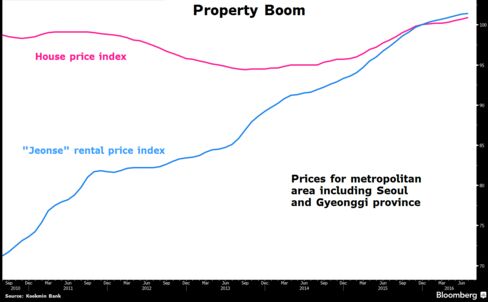
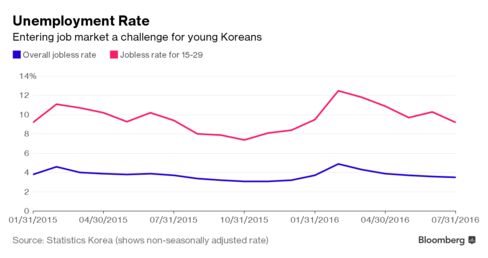
Many young South Koreans say they can’t afford to get married or have children. They cite housing costs as one of the biggest obstacles. Record-low interest rates meant to spur economic growth have fueled a property boom that has priced many of them out of the market. Meanwhile, the unemployment rate among those 15 to 29 years old is 9.2 percent—more than double the national average.
“Previous policies were focused on getting married women to have more babies, but a more fundamental problem could be that young people without jobs are finding it difficult to get married,” said Yoo Jin Sung, a Seoul-based research fellow at the Korea Economic Research Institute. “Youth unemployment is raising the age at which people get married and have their first babies, which can affect the total number of babies they plan to have.”
Women also say South Korea’s corporate culture makes life challenging for working mothers, leaving many reluctant to get married and have children.
Reversing the demographic tide is becoming more urgent. The country will pass two unwelcome milestones next year: its workforce will begin shrinking and people aged 65 and older will outnumber those 14 and below. Without successful government action, the economy’s potential growth rate will fall to 2 percent between 2026 and 2030, from about 2.7 percent now, the Hyundai Research Institute estimates.

The demographic decline is already entrenched: The number of women in their 20s and 30s is expected to fall to about 5.5 million by 2030, down from 7.3 million in 2010, according to the government’s statistics office.

Former Flipkart CEO’s Employee Clash Shows Indian Startup Trauma

  • India’s largest startups are starting to let people go
  • Job cuts point to belt-tightening as funding starts to fizzle
India’s largest online shopping service is heating up, and not in a good way. Flipkart’s regular Friday townhall grew tense after employees incensed by hundreds of job cuts openly accused management of betrayal. Taken aback, chairman Sachin Bansal countered that the departures stemmed from poor performance and he lost his job as chief executive for the same reason.
The co-founder admitted the company had missed financial targets in recent months, prompting an overhaul of its top rungs, according to employees who attended the meeting. He didn’t elaborate but recent moves -- including a brief decision to go mobile app-only after ditching its fashion site -- may have granted an opening to a hard-charging Amazon.com Inc.
Bansal’s unusual candor, which drew applause, underscores the plight of the country’s technology sector as competition intensifies and funding begins to dry up. Flipkart Online Services Pvt and Ola --  two of India’s largest startups -- have jettisoned staff and tightened their belts to sustain a bruising battle with Amazon and Uber Technologies Inc. Following in Flipkart’s footsteps, ANI Technologies PVT’s Ola has shuttered smaller brand TaxiForSure, acquired over a year ago for $200 million, and let go of staff. It’s offered severance benefits and “outplacement” to those discharged, the company said without specifying numbers.
“Call it by whatever name, Flipkart, Ola and several smaller startups like Snapdeal and Zomato are cleaning up their operations to cut costs,” said Satish Meena, an analyst at Forrester Research Inc,’s e-commerce and consumer devices practice. “There will be further job reductions as they encounter an increasingly tight funding scenario and no clear funding picture in the coming quarters.”
As Flipkart and Ola contract, Amazon and Uber are expanding. Amazon said in May its Indian headcount grew 40 percent last year and it would continue to “hire aggressively” to scale up. It’s also spending lavishly on advertising and marketing. Uber, which has brought several top-level Indian executives into the fold recently, said hiring is “picking up pace” to support its growing operations.
Fundraising and deals in India’s thriving technology ecosystem hit records in 2014 and 2015, fuelled by the promise of a fast-expanding internet and smartphone population. Nearly $8.9 billion of venture capital flowed into startups via 965 deals last year, according to data provided by London-based research firm Preqin. 
Certain segments remain attractive. Hike Messenger became India’s newest internetunicorn after securing a round of funding at a valuation of almost $1.4 billion from investors including Tencent Holdings Ltd. But Preqin’s numbers show the pace of funding is faltering, as investors grow wary of valuations and begin to focus on profitability. In the first two quarters of 2016, only $3.3 billion flowed into startups through 644 deals, it said.
Flipkart has seen multiple executive exits in past months, including that of its chief people officer and its chief product officer Punit Soni, a former Google executive from Silicon Valley. Bansal himself was replaced by younger co-founder Binny Bansal (no relation) in January. The company’s also put off recruiting from the Indian Institute of Management in Ahmedabad, a branch of the prestigious management school that’s long been a favorite wellspring of talent.
“For many startups, growth is flattening and investors too are asking them to face up to the new realities,” Meena said.

China Is Grappling With Hidden Unemployment

  • Researcher puts underemployment at 5% and 10% at zombie firms
  • State-run coal and steel companies keep idle workers in limbo
Cracks are starting to show in China’s labor market as struggling industrial firms leave millions of workers in flux.
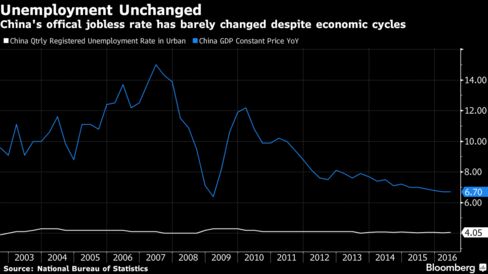
While official jobless numbers haven’t budged, the underemployment rate has jumped to more than 5 percent from near zero in 2010, according to Bai Peiwei, an economics professor at Xiamen University. Bai estimates the rate may be 10 percent in industries with excess capacity, such as unprofitable steel mills and coal mines that have slashed pay, reduced shifts and required unpaid leave.
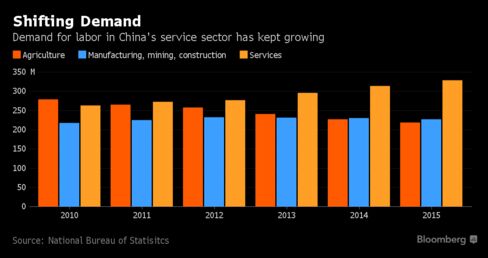
Many state-owned firms battling overcapacity favor putting workers in a holding pattern to avoid mass layoffs that risk fueling social unrest. While that helps airbrush the appearance of duress, it also slows the shift of workers to services jobs, where labor demand remains more solid in China’s shifting economy.
“Underemployment in overcapacity industries is a drag on the potential improvement of productivity in China, which will lead to a softening wage trend,” said Grace Ng, a senior China economist at JPMorgan Chase & Co. in Hong Kong. “It would exert pressure on private consumption demand and in turn affect the overall rebalancing of the economy."

Underemployment Tripled

Other projections indicate the employment situation is even worse. An indicator of unemployment and underemployment produced by London-based research firm Fathom Consulting has more than tripled since 2012 to 13.2 percent.
The official jobless rate isn’t much help for economists: it’s been virtually unchanged at about 4.1 percent since 2010 even as the economy slowed. The gauge only counts those who register for unemployment benefits in their home towns, which doesn’t take into account 277 million migrant workers. Total employment is 775 million, National Bureau of Statistics data show.
The NBS also compiles a newer survey-based jobless rate for big cities, which has been holding steady at about 5 percent, but that index isn’t updated on a regular basis. There’s no official underemployment rate.
With the newly-added labor force now in decline as the population ages, workers should become more scarce during the boom of the labor-intensive services sector. That suggests economic slowdown is the main culprit of labor under-utilization, said Fielding Chen, an economist at Bloomberg Intelligence in Hong Kong.
Bai bases his estimate on average labor activity and worker productivity. From 2004 to 2008, underemployment was effectively near zero following rapid productivity gains from China’s 2001 admission to the World Trade Organization and state-owned industry reforms.

Global Rates

Bai’s rate is lower than numbers for other countries, which use varying methodologies. The U.S. rate known as U-6 is 9.7 percent, down from a record 17.1 in 2009. Australia’s underemployed ratio is 8.7 percent. Mexico’s underemployment rate is 7.68 percent.
Conflicting objectives complicate China labor market dynamics. Even as President Xi Jinping and other top leaders pledge to reduce overcapacity, other official policies prevent widespread firings, in turn letting unprofitable "zombie companies" lock up broad swaths of the labor force by keeping them in limbo with shorter shifts and less pay.
In the heart of coal country, Shanxi Luan Mining Group Co. has said it put some workers on leave to alleviate pressure from downward prices and save money on wages. In Liaoning province, Angang Steel Co. has slashed some salaries by half as it aims to cut total pay by 10 percent this year and ordered early retirement for 3,600 workers, China Youth Daily reported in June.
“Underemployment is especially rampant at state-owned companies,” said Zeng Xiangquan, a professor of labor and human resources at Renmin University in Beijing. "The government tends to overprotect them." That keeps laid-off workers from getting retrained and hired into new jobs in more thriving sectors like services or high-end manufacturing, Zeng said.

Zombie Companies

Zombies make up about 7.5 percent of industrial businesses, which are mostly state-owned enterprises in the northeast rust belt and the less-developed western regions, the official Xinhua News Agency reported in July, citing Renmin economics professor Nie Huihua.
"There’s no quick fix," said Fathom economist Laura Eaton. "In the short term, to reduce the problem of underemployment in China, the government should allow those ‘zombie companies’ with low productivity growth and excess capacity to default or shut down."
If policy makers act swiftly, history shows it’s possible for them to tighten that unwanted slack back to where it used to be, said Bai, who has tracked China’s underemployment back to the beginning of the reform and opening up in 1978. 
Bai’s research shows that underemployment peaked in 1983, 1990 and 2002, but fell sharply after each episode. China began SOE overhauls and extended economic reforms from rural areas to cities in 1984, pushed further overhauls in 1992, and enjoyed an export-led lift off in the early 2000s after WTO entry.
More fiscal policy support for the economy and funding to help fired miners and steelworkers get new skills would be good steps toward a solution, JPMorgan’s Ng said. 
If the other accompanying structural changes let the stronger services sector and healthier new industries tap idle productivity, Bai said, underemployment could decline once again.

— With assistance by Xiaoqing Pi, and Miao Han

Sunday, April 10, 2016

Dubai Developer of World's Tallest Tower Going to New Heights

Santiago Calatrava

Emaar Properties PJSC plans to build a $1 billion skyscraper in Dubai that will exceed the height of the Burj Khalifa, currently the world’s tallest building.
The tower within its Dubai Creek Harbour project will be “a notch taller” than the 828-meter Burj Khalifa, Chairman Mohamed Alabbar said at a press conference on Sunday, declining to be more specific. Construction will start at the end of June and will finish before Dubai hosts the World Expo in 2020.
“We wanted to build a new landmark for Dubai,” Alabbar said. “When we look at Downtown and the Burj Khalifa, the area is almost full to the rim.”
Dubai, the Gulf’s tourist and business hub, is developing hotels and entertainment projects as it aims to attract 20 million tourists annually by 2020 from 10 million in 2012. Emaar’s new tower will have an observation deck, gardens and 18 to 20 floors available for shops, restaurants and other tourist facilities, Alabbar said. The project will be financed by 50 percent of equity and 50 percent of debt.
http://www.bloomberg.com/news/articles/2016-04-10/dubai-developer-of-world-s-tallest-tower-going-to-new-heights

Monday, April 4, 2016

The World Has Started Spending More on Weapons

Global military spending has begun rising in real terms for the first time since the U.S. began its withdrawal of troops from wars in Iraq and Afghanistan, according to theStockholm International Peace Research Institute.
Defense budgets rose 1 percent to $1.68 trillion in 2015, making up about 2.3 percent of the world’s gross domestic product, Sipri said in a report Tuesday. While the U.S. spent the most at $596 billion, that was down 2.4 percent compared with 2014, while China’s outlay increased 7.4 percent to $215 billion.
Concern about a possible advance by Russia into North Atlantic Treaty Organization territory following the Crimea invasion and hostilities in east Ukraine led to a surge in spending in Eastern Europe, as Chinese ambitions in the South China Sea spurred arms purchases among Southeast Asian states.
Defense budgets have been under pressure since the financial crash, with some of the world’s biggest spenders, including the U.K., France and Germany, scaling back amid austerity programs. Following the November terror attacks in Paris and the expansion of campaigns against Islamic State, those countries plan “small increases” in 2016, Sam Perlo-Freeman, the report’s author, said.


Russia, where slumping oil receipts have weighed on the economy, fell to fourth position in the global rankings, with Saudi Arabia taking third spot. The Mideast country, also hurt by the lower price of crude, would have cut spending too had it not been for the $5.3 billion cost of its military campaign in Yemen.
http://www.bloomberg.com/news/articles/2016-04-04/global-military-spending-rose-in-2015-stockholm-peace-institute

A Conversation With Panama's Suddenly Notorious Offshore Lawyers

For decades now, Jurgen Mossack and Ramon Fonseca have been the go-to guys in Panama for international investors looking to put their money in far-flung places.
But even before the world learned their names Sunday  .. in reports that alleged their firm played a critical role in helping political leaders around the world move money offshore -- the lawyers knew their lucrative partnership had begun to fray.
During a four-hour interview last week, Mossack and Fonseca sounded like two men in retreat: the go-go days of cranking out shell companies en masse for clients was over; the firm’s been considering scaling back its international franchising; and Mossack was expressing frustration about how Fonseca’s political ambitions were earning them unwelcome scrutiny from regulators and the media. Just days earlier, Fonseca had stepped down as a special adviser to President Juan Carlos Varela, saying he wanted to focus his attention instead on the business.
“We are going to make ourselves the right size  smaller,” Fonseca said. For the co-head of a firm that over the past few decades has helped revolutionize the way companies and wealthy individuals structure their investments across the globe -- and popularized the British Virgin Islands as a hub -- the statement marks a big drop in ambition.
Many of the details of Mossack Fonseca’s operations were revealed in a documents leakthat the International Consortium of Investigative Journalists says showed how scores of celebrities and world leaders have been shuffling billions of dollars through banks and shell companies. Among those who the ICIJ says used the firm’s services to help them stash money overseas are Argentine President Mauricio Macri, Ukrainian President Petro Poroshenko and associates of Russian President Vladimir Putin.
Officials from all three countries denied any wrongdoing, as did the law firm, which said in a statement over the weekend that it “does not foster or promote illegal acts.” It also refused to comment on any of the clients named in the reports. On Monday, Mossack said in a phone interview that the leak stemmed from the hacking of the firm’s computers and that an outside sleuth had been hired to investigate.
‘da Vinci Man’

Of the two men, it is Mossack, a 68-year-old with German roots, who displays a keen mastery of the nuts and bolts of the business. He did most of the talking during the March 29 interview in their Panama City headquarters. The building is sleek, with a distinctive glass-facade, but looks diminutive amid the skyscrapers that dominate the financial district. Across the street is the iconic F&F Tower, a helix-shaped building that helped give the booming city its nickname “Dubai of the Americas.” As the two men spoke that morning, they were flanked by their legal director and two consultants. In all, the firm employs some 500 people in Panama and across the globe.
If Mossack is the nitty-gritty guy, Fonseca, 63, is the self-proclaimed dreamer.
He boasts that his friends have labeled him “a da Vinci man” for his interests in politics, law, business, letters and philanthropy. He’s penned a half-dozen novels over the years, and for a while as a young man had considered becoming a priest.
It was during his time as a bureaucrat at the United Nations in Geneva, where he was surrounded by international lawyers, that Fonseca said he was lured by the mysterious world of offshore businesses. “One day it occurred to me that I could do it too,” he said. “I created my little office and left the UN and started with one secretary to create and sell companies.” He’d join up with Mossack soon thereafter.

Like Selling Cars
http://www.bloomberg.com/news/articles/2016-04-05/a-conversation-with-panama-s-suddenly-notorious-offshore-lawyers

Panama Papers rock financial world

A huge leak of documents has rocked the financial world revealing how some among the rich and powerful use tax havens to hide their wealth.
The files leaked from a Panamanian law firm called Mossack Fonseca contain 40 years of data and include information on more than 210,000 companies in 21 offshore jurisdictions, from Panama to Hong Kong.
The files show how Mossack Fonseca clients were able to launder money, dodge sanctions and avoid tax.
In one case, the company offered an American millionaire fake ownership records to hide money from the authorities in direct breach of international regulations that stop money laundering and tax evasion.
More than 60 relatives and associates of heads of state and other politicians are implicated.
For instance, the files reveal a suspected billion-dollar money laundering ring involving close associates of Russia’s President, Vladimir Putin.
Also mentioned are the brother-in-law of China’s President Xi Jinping; Ukraine President Petro Poroshenko; Argentina President Mauricio Macri; the late father of UK Prime Minister David Cameron and three of the four children of Pakistan’s Prime Minister Nawaz Sharif.
The documents show that Iceland’s Prime Minister, Sigmundur Gunnlaugsson, had an undeclared interest linked to his wife’s wealth. He is now facing calls for his resignation.
The scandal also touches football’s world governing body, Fifa, the BBC reported.
Although there are legitimate ways of using tax havens, most of what has been going on is about hiding the true owners of money, the origin of the money and avoiding paying tax on the money.
The 11.5 million documents were obtained by the German newspaper Sueddeutsche Zeitung and shared with the International Consortium of Investigative Journalists (ICIJ).
It is the biggest leak in history, dwarfing the size of those released by the Wikileaks organisation.
http://www.lankabusinessonline.com/panama-papers-rock-financial-world/

Tuesday, January 5, 2016

China Said to Intervene in Stocks After $590 Billion Selloff

Market intervention is said to a bad act. But however this has both antagonist as well proponents view over the course.Here I do not want to talk over the course of market intervention. Recently China is facing a clear melt down in their economy due to various reasons. Manufacturing has been in records low and their growth has been recorded below value since 1990's.
China has been intervening the market to stop the market crash slowly through over a year of period and it has been viewed with mixed terms. However most important fact is, whether it may be intervention or any term "Should the government to be allowed to use public money to buy falling starts ?"
It's said to be that Chinese intervene market in early of last year 2015 heavily on march to June has caused the market to blossom and hit the sky with artificially created hype in June to July in 2015. And now it is going down steadily.
2016 year starts with high lost. "does this has the impacts of market intervene during last year which cause the artificial hype in June ?? "

Now Chinese authorities putting restrictions on big shots. Putting restrictions on trades in bigger volumes.
Big players loose money, value in big numbers. But surely the restrictions will give a temporary relief for the devastating market. But for how long ?
What will be the impacts? Does these interventions means that China to be regarded as a good territory for investments ? Who says "yes"   Who says  "No"
Or China as field of investment or a plain which give a reasonable fair opportunity for investors to secure their investment against big shots. Specially against the Monkey Merchant. (famous monkey theory in Stock Market)

Below is a good article i have read n the bloomberg which capture snapshot of a story of inrvetion with mixed feeling or rather antagonist approach over intervention.

====================================================================

  • State funds buy after CSI 300 index tumbled 7% on Monday
  • CSRC signals six-month selling ban on major holders to stay

China moved to support its sinking stock market as state-controlled funds bought equities and the securities regulator signaled a selling ban on major investors will remain beyond this week’s expiration date, according to people familiar with the matter.


Government funds purchased local stocks on Tuesday after a 7 percent tumble in the CSI 300 Index on Monday triggered a market-wide trading halt, said the people, who asked not to be identified because the buying wasn’t publicly disclosed. The China Securities Regulatory Commission asked bourses verbally to tell listed companies that the six-month sales ban on major stockholders will remain valid beyond Jan. 8, the people said.
Chinese policy makers, who took unprecedented measures to prop up stocks during a summer crash, are stepping in once again to combat a rout that erased $590 billion of value in the worst-ever start to a year for the nation’s equity market. While the intervention may ease some selling pressure, it also undermines authorities’ pledge to give markets more sway in the world’s second-largest economy.
“The market has got some help from state funds and that will support shares in the short term,” said Wang Zheng, the Shanghai-based chief investment officer at Jingxi Investment Management Co. “However, in the long run, the market will need its own strength to hold up. It can’t always rely on the national team.”
China’s CSI 300 index rose 0.3 percent at the close, after earlier falling more than 2 percent. The plunge on Monday triggered the nation’s circuit breakers on their first day in effect, dealing a blow to regulatory efforts to calm one of the world’s most volatile bourses. Authorities are trying to prevent market turmoil from eroding confidence in an economy set to grow at its weakest annual pace since 1990.


The sales ban on major holders, introduced in July near the height of a $5 trillion rout, will stay in effect until the introduction of a new rule restricting sales, the people said. Listed companies were encouraged to issue statements saying they’re willing to halt such sales, they said.
Several firms did so this week. The controlling holder of Shenzhen-listed Zhejiang Century Huatong Group said in an exchange filing it wouldn’t sell shares on the secondary market for another year after its previous commitment expires in January. Changshu Tianyin Electromechanical Co., a maker of refrigerator-compressor parts, said its controlling holders won’t pare holdings over the next nine months.

International Concern

The regulatory ban, announced on July 8, applied to investors with holdings exceeding 5 percent in a single stock, along with corporate executives and directors. The restriction drew criticism at the time from foreign investors including Templeton Emerging Markets Group and UBS Wealth Management, who saw the intervention as a step too far. Goldman Sachs Group Inc. estimated the ban kept $185 billion of shares off the market.
An extension would come as a surprise to many investors. All seven strategists and fund managers surveyed by Bloomberg at the end of last month said they expected regulators to let the ban lapse this week.
“We don’t really like market intervention,” Stephen Ma, a senior portfolio manager at LGM Investments Ltd., whose parent oversees more than $254 billion. “The government should have learned their lesson last summer.”

Chinese policy makers used purchases by government-linked funds to prop up shares as the CSI 300 plunged as much as 43 percent over the summer. State funds probably spent $236 billion on equities in the three months through August, according to Goldman Sachs. The CSRC didn’t immediately respond to a faxed request for comment.


Wednesday, December 30, 2015

From Worst to First: Bitcoin's Price Ends 2015 on Top

After a year filled with its share of doom and gloom, the verdict is in: Bitcoin won 2015.
As trumpeted by headlines in CNBC and Bloomberg, bitcoin was the best-performing currency of the year, netting near-40% gains, more than double its nearest competition, the Somali Shilling and Gambian Dalasi. The development contrasts with bitcoin's performance from 2014, in which it lost56% of its value, the most among global currencies.
A look at the CoinDesk USD Bitcoin Price Index (BPI) from October on reveals an impressive upward arch that contrasts with the choppy peaks and valleys of the year's earlier months.
BTC prices 2015
Though the exact reasons are unclear, many pundits are pinning the currency's turnaround on the growing enterprise fascination with blockchain tech and the renewed mainstream attention from stories such as the alleged discovery of bitcoin's founder, Satoshi Nakamoto.
But as we head into 2016, a big question remains to be answered: Will recent price positivity continue to buoyed by fundamental market improvements?
While only time will provide the answer, we take a look back at the price movements over the last 12 months for clues and considerations.

January

Despite starting the year at just over $300, the bitcoin price crashed to a low of around $170 on 14th January, losing 37% of its value in two days. As an example of just how sudden and dramatic the drop was, even noted bitcoin bull Barry Silbert proclaimed the market had "capitulated".
The last time the price had crossed the $200 line had been in late October 2013, before its meteoric rise to more than $1,000.
coindesk-bpi-chart-jan
The low price wasn't bad news for everyone, however. Traders got busy accumulating new positions and exchanges had their busiest day since a price rally in November 2014.
The price rebounded somewhat over the following 12 days to just over $270 and ended the month on a high note as the price rocketed over $300, seemingly at the news that exchange and wallet provider Coinbase had closed a $75m funding round.

February

February started on a low note as Coinbase euphoria waned and the price fell back below $250.
Mid-month, however, the bitcoin price gained nearly $50 in four days of trading. This represented a 23% gain over that period.
coindesk-bpi-chart-feb
Soon, as was to become tediously common, the price once again settled back below $250, undulating around $240 before a slight climb to over $250 to close the month.

March

Bitcoin price gains that peaked at $286 were supported by strong volume growth early in the month. Some 3.67m BTC changed hands on the week ending 7th March, which was a 55% increase over the previous seven-day period.
The second half of the month saw a reprisal of the slump to the low $200s.

Coindesk BPI chart for marchApril to June

The above pattern was to repeat through the three months April to June, when the price generally sat level at between $220 and $240.
The best one could say about the situation, perhaps, was that the notoriously volatile digital currency had "found a floor", a positive for those who consider the digital currency a viable store of value.
The development wasn't so good for traders, of course, but many have said that low volatility is key if bitcoin is ever to go mainstream as a method of payment.
Coindesk BPI chart Apr-Jun
On 17th June, after months of relative calm, the price of bitcoin finally broke out of the doldrums and spiked to a high of $257.
One of the most prominent theories that emerged to explain the rise was related to the market's timing, which roughly coincided with growing indications that Greece would possibly default on its debt obligations – the 'Grexit', as it had been nicknamed.
The fervent hope among many in the bitcoin community was that Greeks would switch to the digital currency as they saw their banks accounts frozen and ways to move money in or out, such as PayPal and Western Union, were shut off in the country while a deal was hammered out with the EU.
Despite media reports selling that line, some commentators said it was just as likely that the price rise was a coincidence and the evidence for Greeks adopting bitcoin was very thin on the ground.
The price dropped slightly in the days after, before finishing June on a high of over $260.

July

On 13th July, the bitcoin price continued to climb, shooting past the $300 mark and reaching its highest level since 10th March.
Many still put the rises down to the economic situation in Greece; others attributed it to the psychological effect of people hoping for such a trend.
Prices July
Mid-month, CoinDesk launched a reader's poll that concluded that some 62% of bitcoin enthusiasts believed the digital currency would be worth less than $500 at the end of this year. (While the trend is in the right direction to top $500, it's looking like our readers were right as we go to press).
After the possibly-Greek-influenced climb early in July, the price dropped slightly and spent the rest of the month around $275 to $290.

August

A general downward price trend through the month was interrupted by two notable negative events brought about by a single bitcoin exchange.
Firstly, on the 19th August, a 'flash crash' at Hong Kong-based Bitfinex caused the price of a bitcoin to nosedive 14% in a period of just 30 minutes.
Bitfinex price crash
The price had been holding steady between $250 and $255, but dropped to a low of $214.36 just before midnight (UTC). In the same period, the Bitfinex price sank 29% to $179.35.
The exchange told CoinDesk at the time that the flash crash was triggered when several leveraged positions were forcibly closed in close proximity to each other.
Then, on the 24th, just a few days later, the price slumped again after Bitfinex closed its order book for seven hours, citing issues with its post-trade processing.

September

Generally uneventful, September's prices hovered in the $230 to $240 range, with a peak at around $245 on 8th September.
What was promising, however, was the signs of a rising trend towards the close of the month, though it closed at just $236.
BTC prices - Sept

October

That upward trend noted at the end of September continued through October until it achieved a price of over $260 on 13th October, its highest price in two months.
The raise may have been caused by a sudden surge in bitcoin trading volume driven predominantly by the Chinese exchanges Huobi and OKCoin.
Bobby Lee, CEO of Chinese exchange BTCC, told CoinDesk at the time that his platform has seen a significant volume increase, though he dismissed much of his competitors' volume as "artificial".
Those behind the volume, he said, are not traders but consumers sucked into a Russian ponzi scheme, MMM.
BTC price - Oct
The price trend nonetheless continued skywards and on 28th October it broke through the $300 barrier on the CoinDesk BPI for the first time in over three months.
Soon after, the price was at a new high for 2015, peaking at $333.75 on the 30th.

November

The positive trend continued into November, with the price rapidly reaching, first $400 on the 3rd, then over $480 on the 4th of the month.
The sudden rise prompted Wedbush Securities to revise its 12-month projections for the price of bitcoin and revealing it expects the price to rise to $600 over the next year.
BTC price Nov
After a sharp drop on the 11th that took the price back down to close to $300, it settled down to a new normal of around $325 for much of the remainder of the month, with a rise at the close to over $370.

December

So, here we are in the closing month of 2015, and the price is trending up.
On the 15th, it reached the highest level since September 2014, climbing to more than $465 across most major exchanges.
Bitcoin price - Dec 2015

Despite a slight drop since then, pundits are enthusiastic, with many arguing the industry is poisedfor a positive start to 2016.
What is your prediction for the bitcoin price in 2016? Provide your thoughts below.

http://www.coindesk.com/bitcoin-price-in-2015-doom-and-gloom-give-way-to-positive-years-end/